Helping home cooks remember what they changed while cooking and why
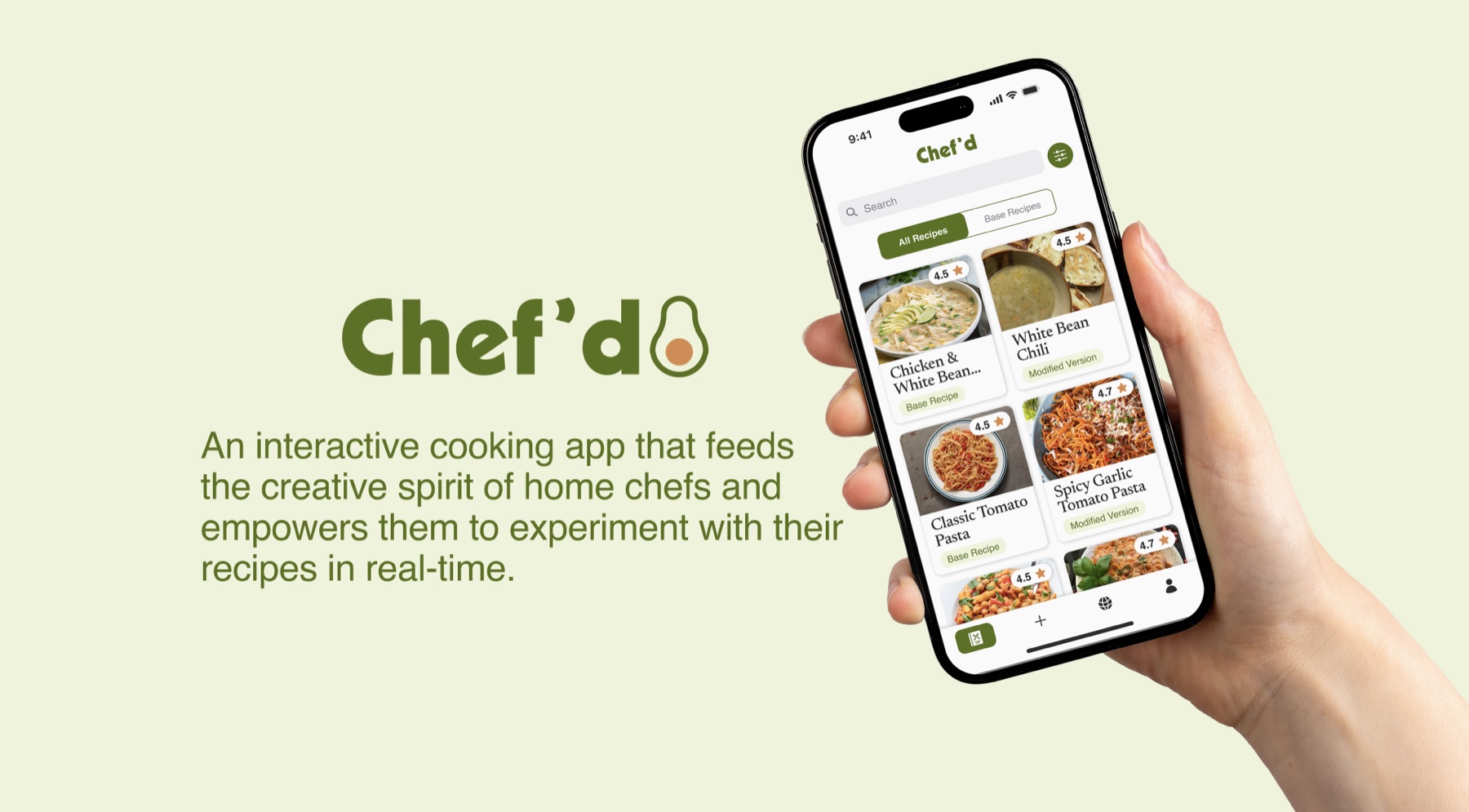
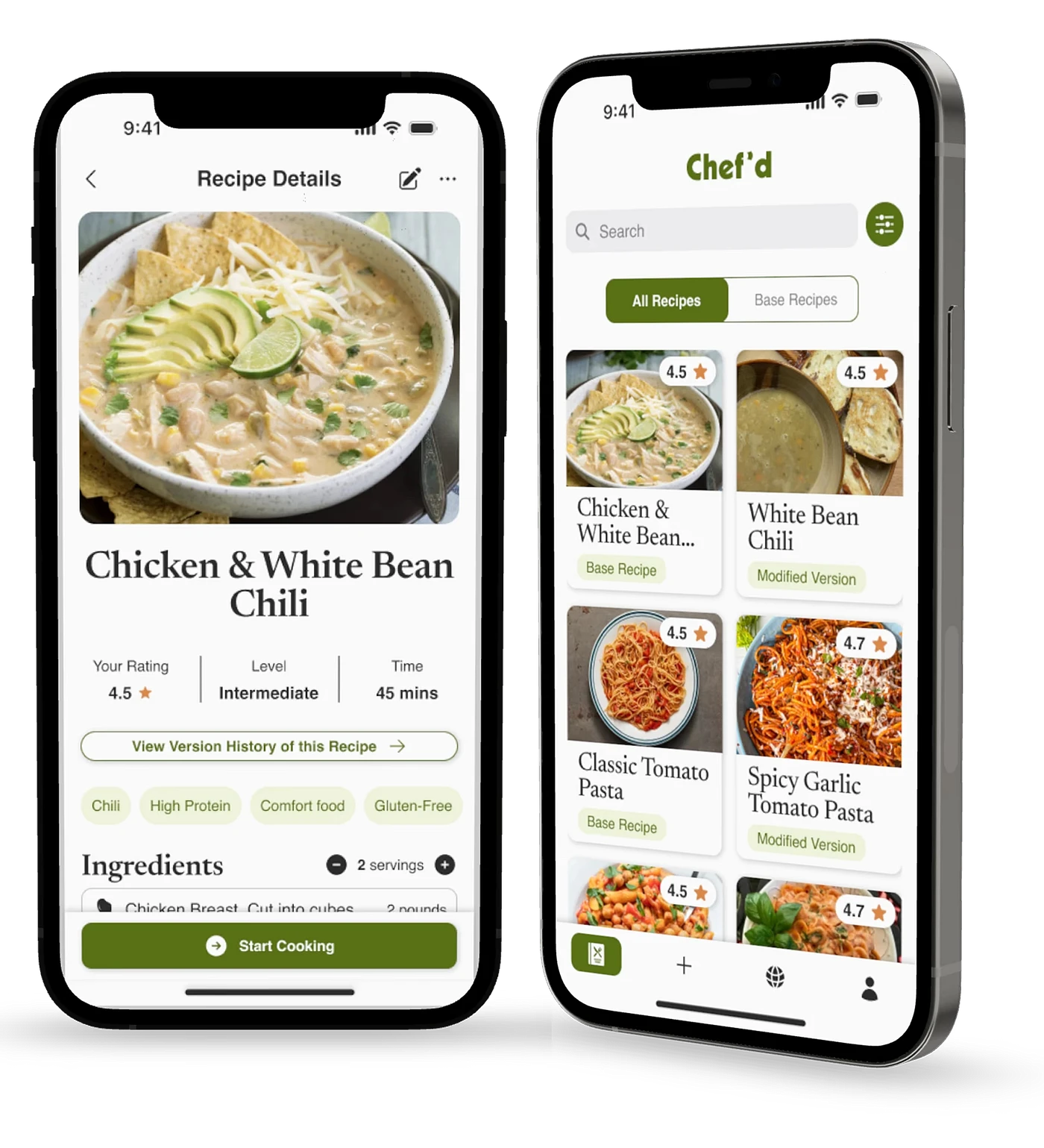
A design challenge where I conducted user research, testing, and design iterations, which resulted in Chef’d, a recipe app built around how people actually cook: by improvising, adjusting, and rarely following a recipe exactly as written.
Recipes are a static, fixed set of instructions. But that’s rarely how people actually cook. Home cooks swap ingredients, adjust spice levels, and improvise constantly, and almost none of that gets remembered anywhere.
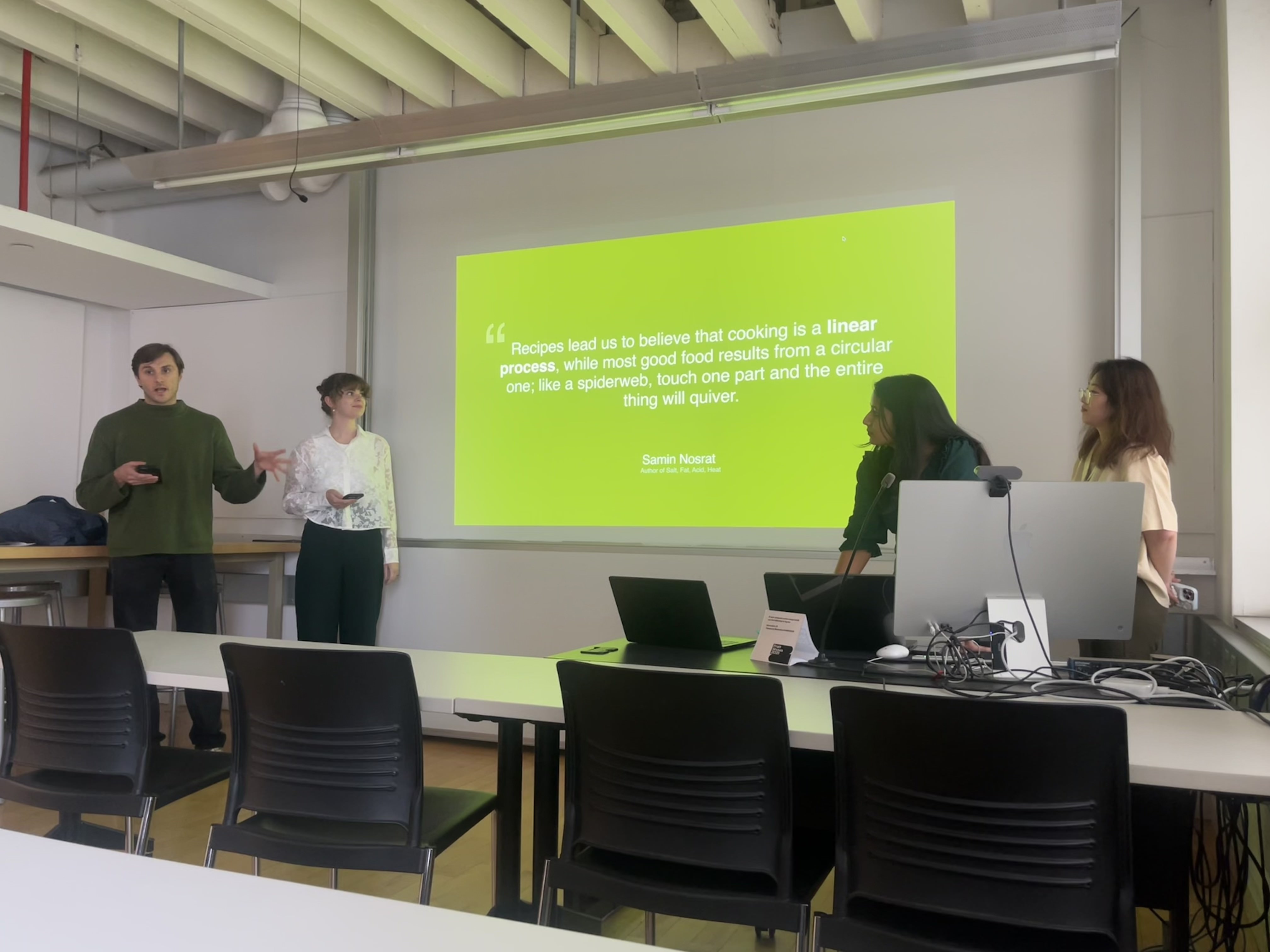
“Recipes lead us to believe that cooking is a linear process, while most good food results from a circular one, like a spiderweb: touch one part and the entire thing will quiver.”
Samin Nosrat, author of Salt, Fat, Acid, Heat
That idea became our design question: how might we help home chefs keep track of the modifications they make to recipes, so they can reflect on, repeat, and evolve their cooking practice over time?
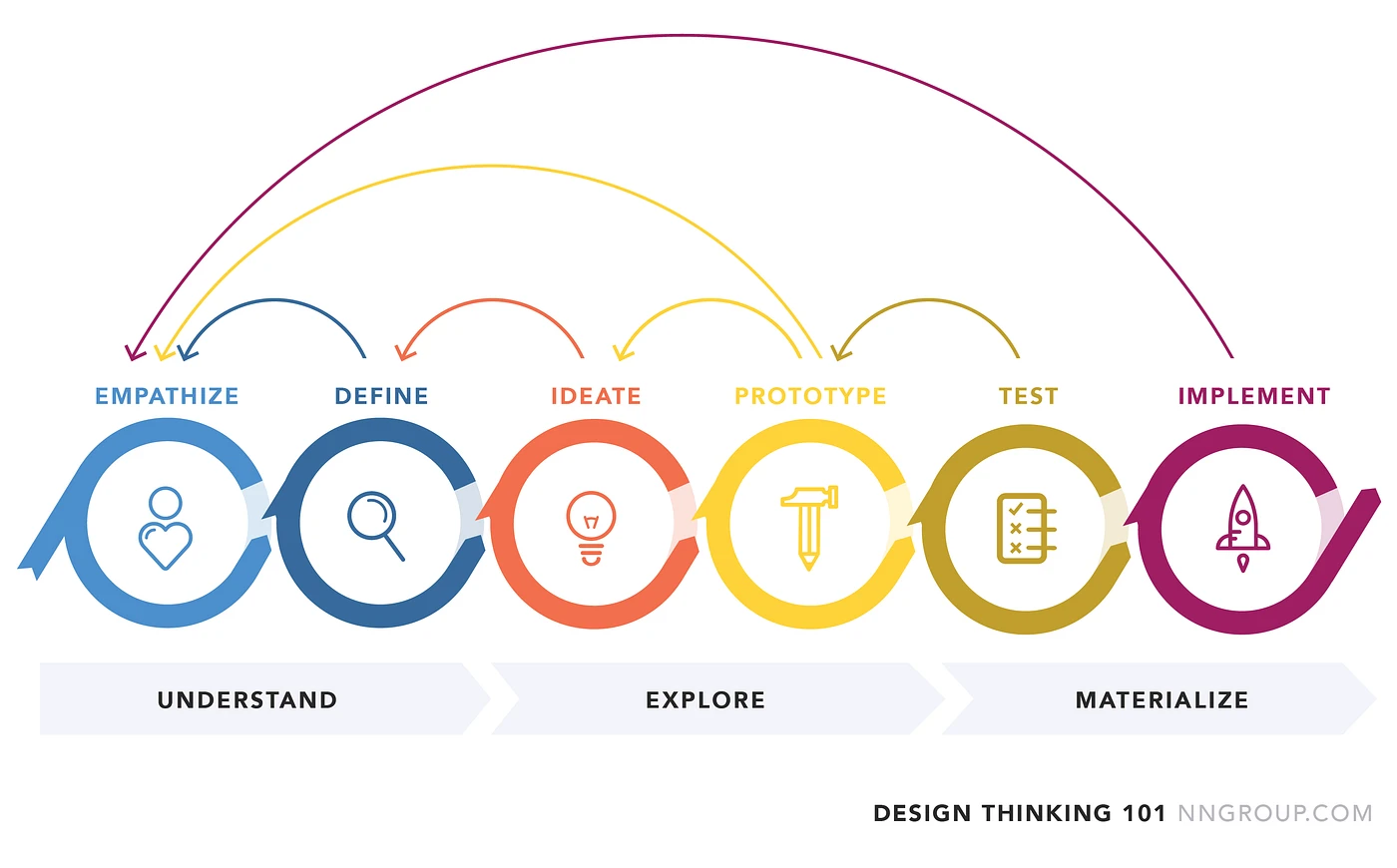
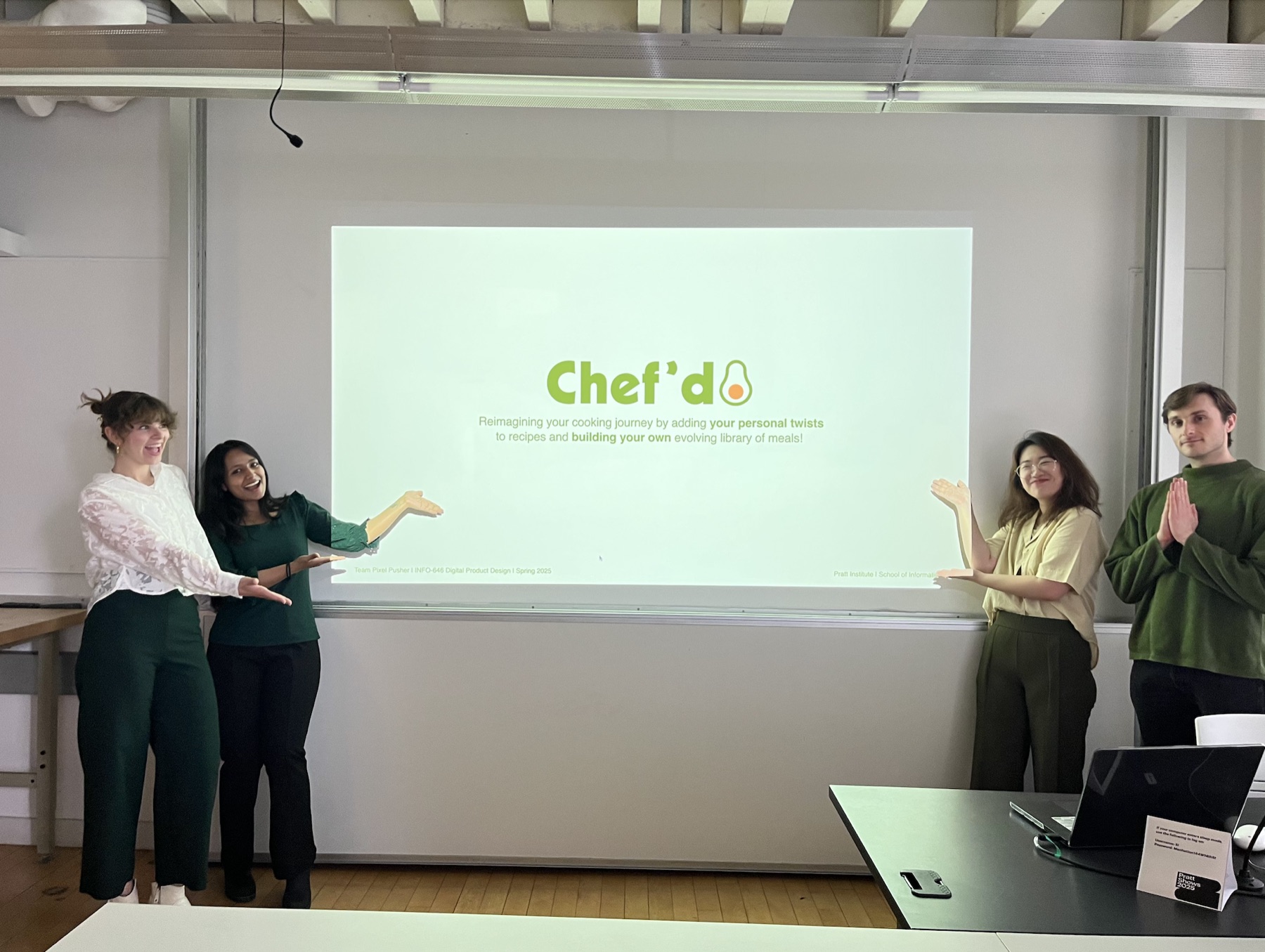
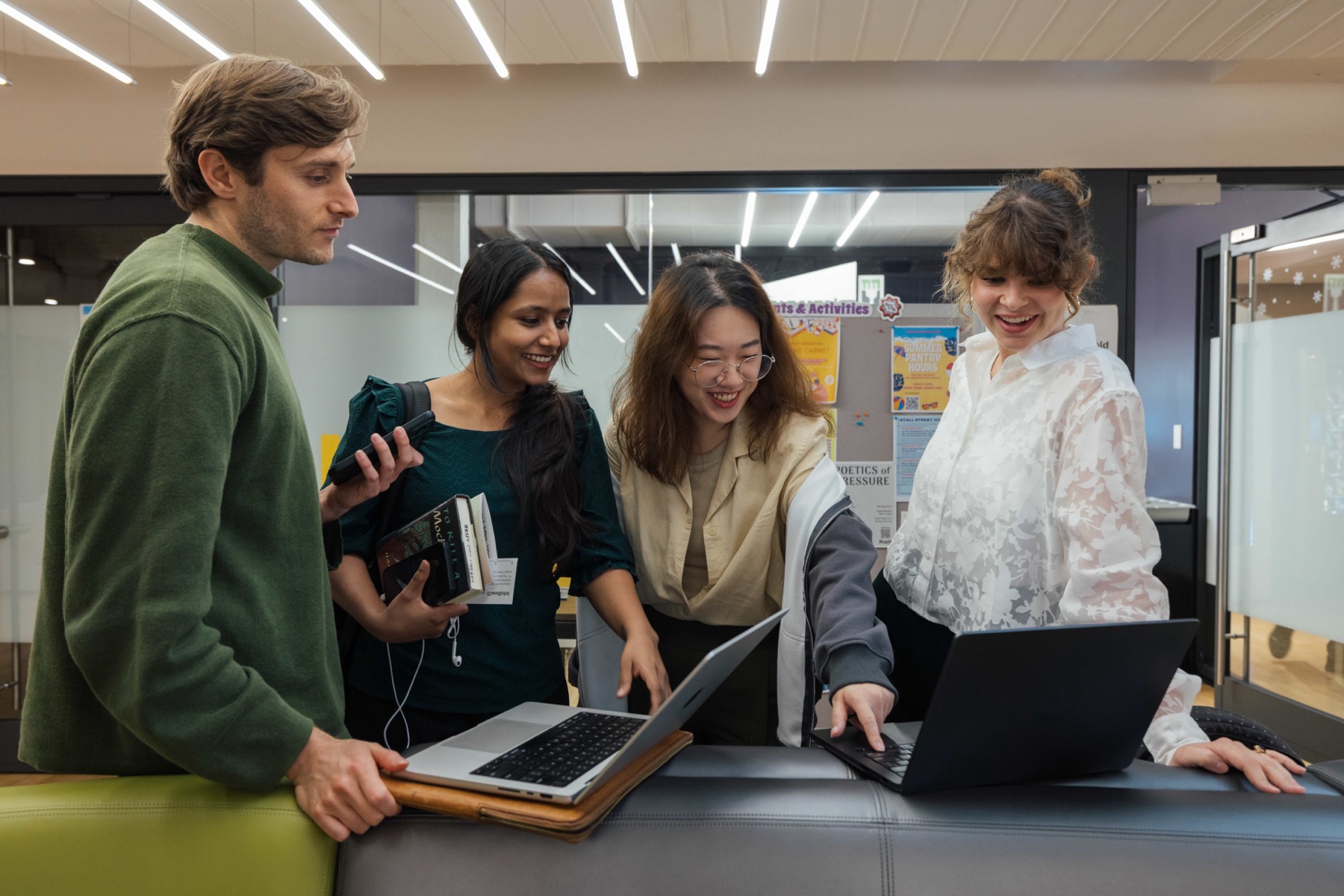
Our design thinking processThe team presenting at InfoShow25
Researching how people actually cook
Initially starting this project, we had the hypothesis that users don’t organize their recipes online, that recipes get saved in TikTok, Instagram, the Notes app, and anywhere else. We followed a standard design thinking process, but our early research quickly complicated our assumptions about what “organization” even meant to a home cook.
A screener survey to identify and recruit the right participants.
Eight in-depth interviews, synthesized through affinity mapping.
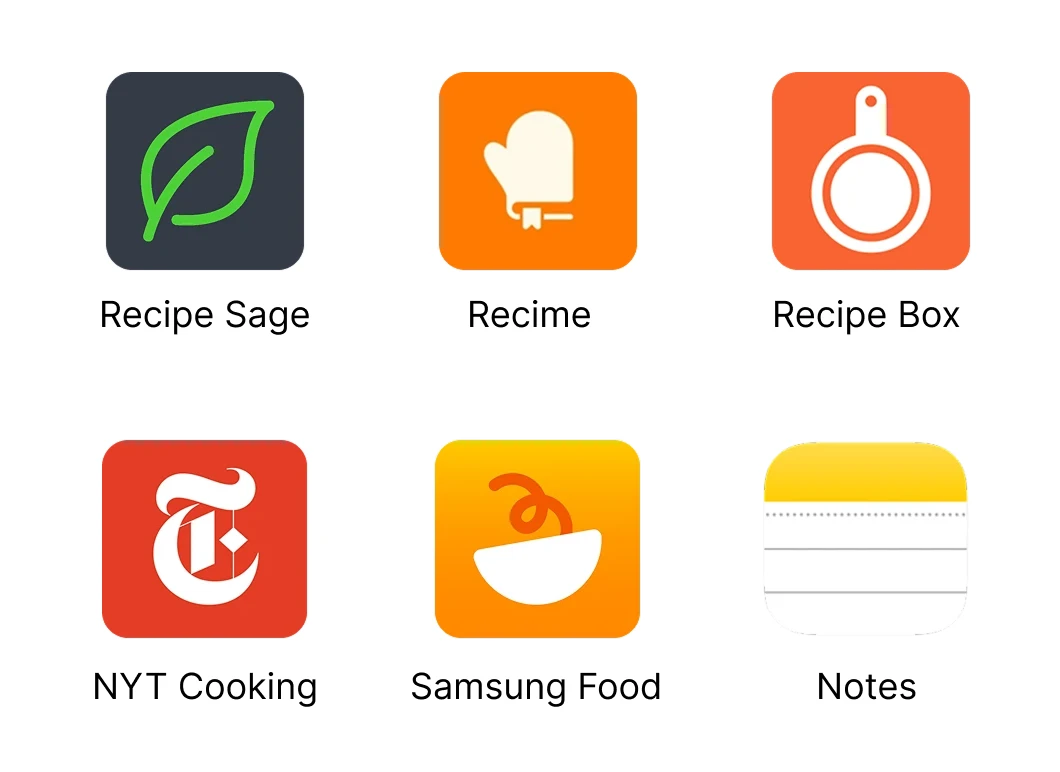
Competitive analysis of six existing recipe and cooking apps.
A SWOT analysis to map where the market was already crowded, and where it wasn’t.
Competitive analysis of six apps
What we learned: organization wasn’t the real problem
Through our conversations with people, we realized that home cooks stray from recipes they find while cooking but don’t document the changes they make to the recipes.
People wanted personalization, not just storage. A saved recipe should feel like theirs, not a copy of someone else’s.
Nobody could remember what they changed, or why. A recipe cooked three different ways over three months left no trace of the journey.
Existing tools felt static. None of them treated a recipe as something that evolves the more you cook it.
Introducing Chef’d
We narrowed a wide field of early concepts, including community collaboration, recipe family trees, and mood-based organization, down to four features that most directly answered our design question.
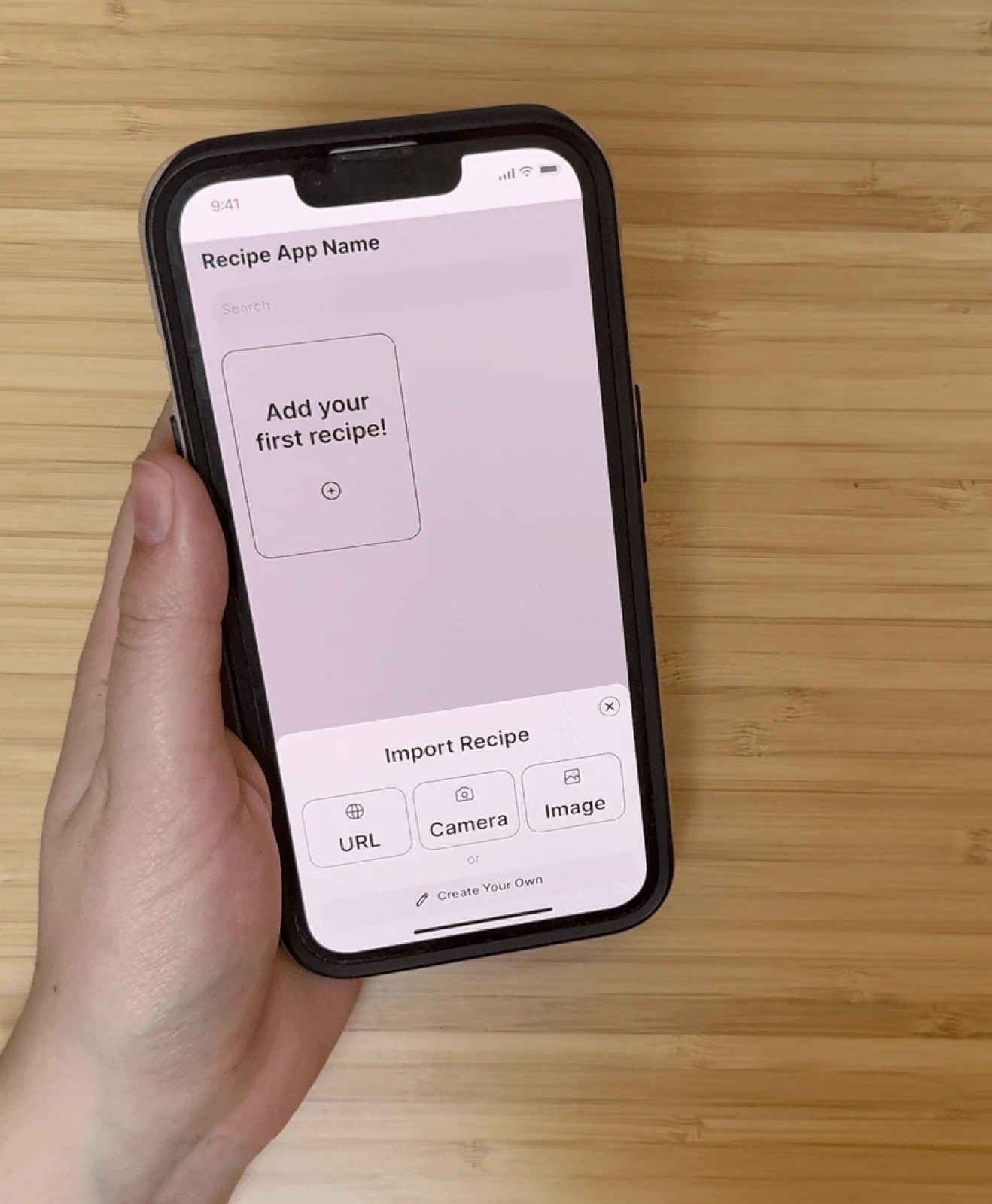
Add Recipe. Import a recipe from a URL, a photo, or by typing it in from scratch.
Edit Recipe. Adjust a recipe mid-cook without losing the original version underneath it.
Cook Mode. Hands-free, voice-guided cooking that captures notes while your hands stay messy.
Version History. Users choose modifications they want to save, allowing a recipe’s evolution to be something you can look back on.
Testing revealed a trust problem, not a feature problem
We built out a mid-fi version of our app and ran eight moderated usability sessions, thirty to forty-five minutes each, asking participants to modify a recipe, use cook mode, and find a previous version. Testing revealed three key findings.
Finding 01
Seven of eight users missed the version history icon entirely
A feature nobody can find might as well not exist. We moved version history out of a secondary menu and into the recipe detail view itself, right where someone would already be looking when they wanted it.
Finding 02
Five of eight expected their modified recipes on the homepage
People assumed the recipes they’d personalized would be the first thing they saw, not something buried behind their original, unedited versions. We rebuilt the homepage to surface modified recipes front and center, while keeping them differentiated from the original recipes.
Finding 03
Six of eight weren’t sure cook mode was actually saving their notes

The feature didn’t make users feel secure about their modifications being saved. We added explicit, visible confirmation every time a note was captured in cook mode, so trust wasn’t something users had to take on faith.
The pattern across all three: visibility equals trust. A powerful feature still fails if people can’t see their own work reflected back at them.
Conducting user testing
Every detail was held to a professional standard
As we moved into hi-fi design, we wanted every part of Chef’d, down to the smallest interaction, to feel professional and polished. That standard applied everywhere, including the handful of seconds most teams treat as an afterthought.
Opening animation. An avocado splitting open to reveal the logo, giving the app a confident, considered first impression before a user ever touched a recipe.
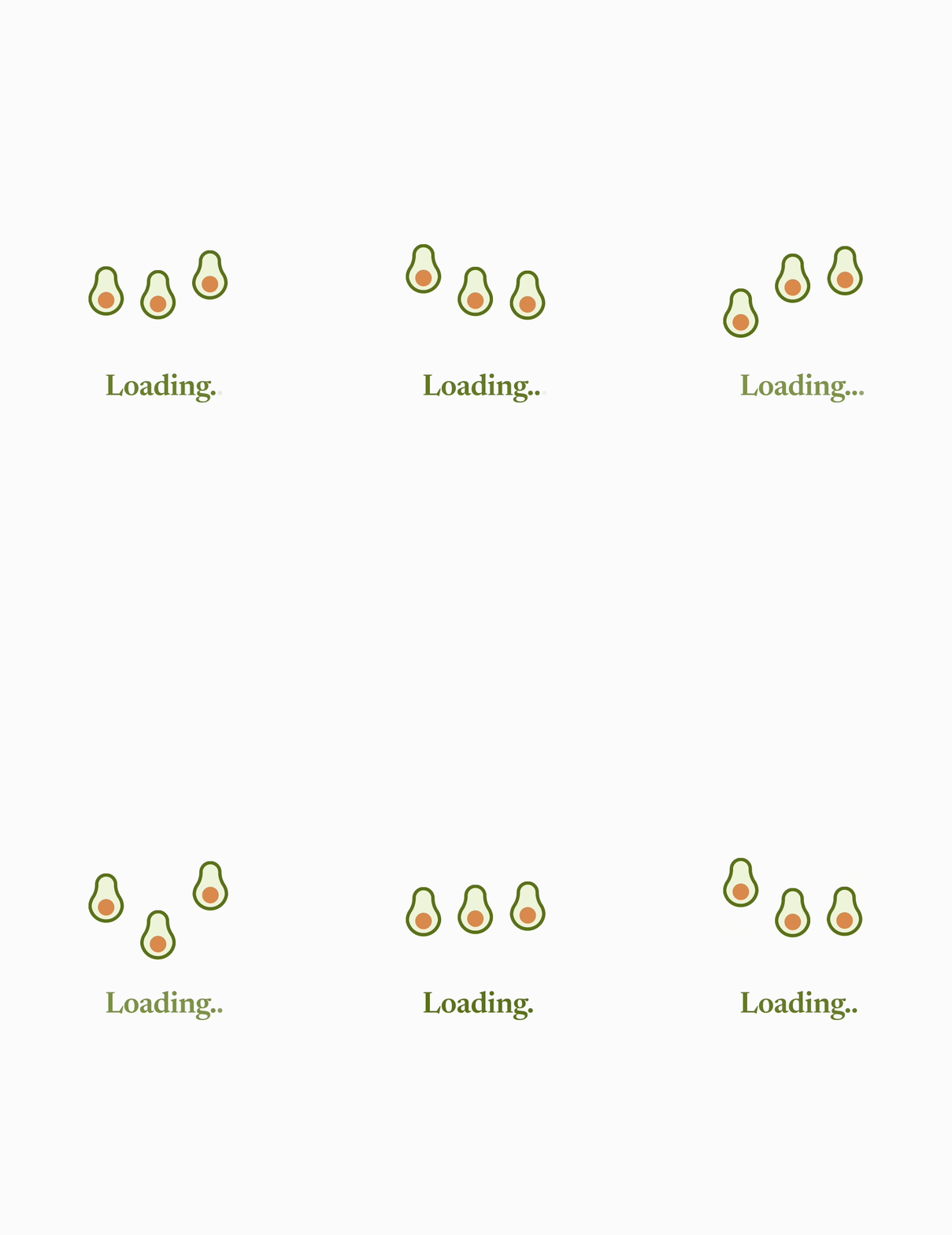
Loading animation. Three avocados filling in one by one, turning unavoidable wait time into something that still felt intentional and cared for.
Success animation. A clear, immediate confirmation after saving a recipe change, so a save felt as trustworthy as the rest of the product.
OpeningLoadingSuccess
An audience favorite at Pratt InfoShow
Chef’d was presented at Pratt InfoShow 2025, had a very strong, positive reaction, and was named an audience favorite.
88% retention rate among test users.
4.84 out of 5 average rating.
Audience favorite at Pratt InfoShow 2025.
What’s next
If I were to continue on this project, I would want to develop:
Nested versions, so a recipe’s history can branch instead of staying a single line.
Collaborative cooking, letting people modify and riff on a recipe together.
Social discovery, so a well-loved modification can be found by someone other than the person who made it.
Thanks for reading!
Chef’d was built by myself, Connor, Gloria, and Rohini. This team taught me so much about teamwork, especially about playing to each other’s strengths and learning from one another along the way. It’s a lesson that stuck with me, and working alongside this team was something I genuinely enjoyed.